

A garment printing shipping workflow that breaks down at any single stage costs you more than just time. It costs you customer trust, re-ship expenses, and the operational momentum your shop needs to scale. Print shops face a layered challenge: production variability, SKU complexity, carrier selection, and packing accuracy all converge before a single parcel leaves your facility. This guide walks through every stage of the fulfillment process, from order receipt to carrier handoff, with specific tools, techniques, and automation strategies that reduce errors and keep delivery promises.
Table of Contents
- Key Takeaways
- The garment printing shipping workflow: core concepts
- Prerequisites: tools and technology you need first
- Step-by-step execution of the shipping process
- Packaging optimization: dimensions, materials, and cost
- Technology integration: automation, tracking, and returns
- Troubleshooting common shipping workflow mistakes
- My take on what most print shops get wrong
- How Pythiastechnologies supports your shipping workflow
- FAQ
Key Takeaways
| Point | Details |
|---|---|
| Build a clean metadata foundation | Standardized order data at intake prevents routing errors and downstream shipping delays across all channels. |
| Use barcode scanning at packing | Scanning each item before sealing confirms correct SKU and quantity, cutting costly re-ships before they happen. |
| Right-size your packaging | Switching to properly dimensioned mailers can reduce shipping damage by 28% and lower dimensional weight costs. |
| Automate carrier selection | Multi-carrier platforms with automated shipping rules remove manual decisions and reduce fulfillment time per order. |
| Gate quality before shipping | Curing verification and QC checks must happen before packing, not after a customer complaint triggers a return. |
The garment printing shipping workflow: core concepts
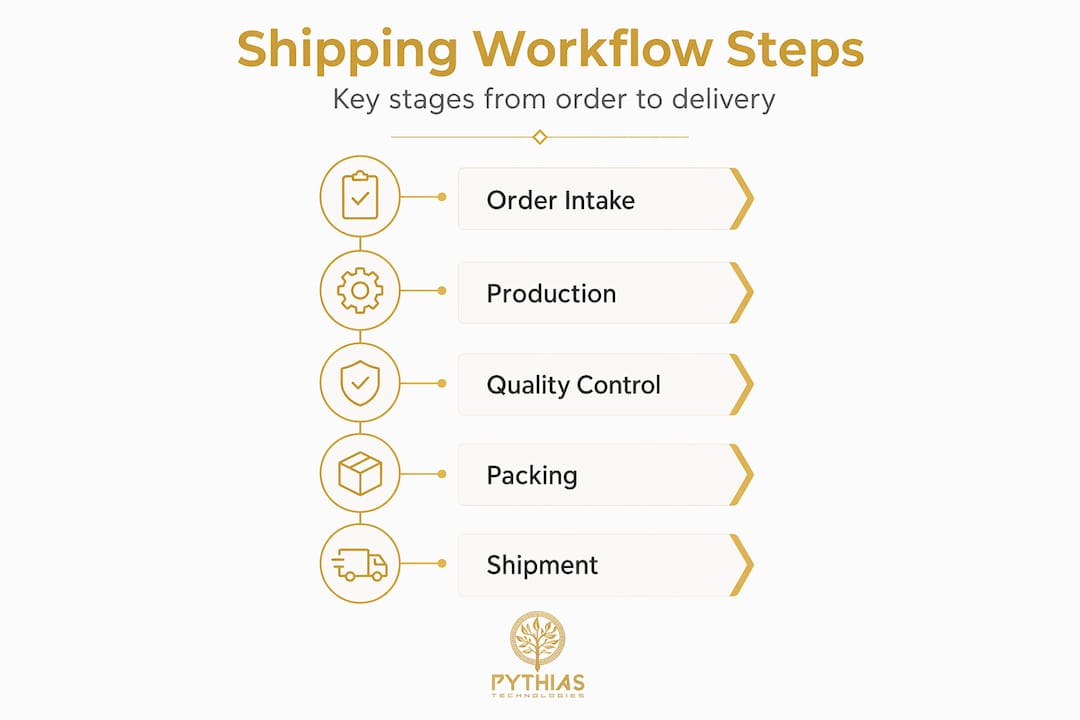
The industry term for what most print shop owners call their “shipping workflow” is order fulfillment workflow. It spans every operational step from order receipt through production, quality control, packing, and carrier handoff. The garment printing shipping workflow is a subset of that, covering the post-production stages where errors tend to compound fastest.
An end-to-end fulfillment process includes provider assignment, payment verification, quality control, packaging with barcode scanning, and carrier handoff that generates tracking numbers linked directly to your dashboard. Each stage is a potential failure point if you have not defined clear handoff boundaries and assigned accountability.
Understanding the full scope is the first step. The sections below break it down into what you need, how to execute it, and how to verify it is working.
Prerequisites: tools and technology you need first
Before you can optimize execution, you need the right infrastructure. Most shipping bottlenecks trace back to missing or inconsistent tools at one of these four layers.
Order management and e-commerce integration
Your order management system must pull data cleanly from every sales channel. Inconsistent metadata, missing SKUs, or mismatched product variants create routing errors that no amount of downstream automation can fix. If you sell across Shopify, Etsy, and your own site, those orders need to flow into a single queue with normalized data fields before production begins. Platforms like Pythiastechnologies offer multi-marketplace integration that routes orders automatically without manual intervention.
Barcode scanning and label printing
A barcode scanner at your packing station is not optional equipment. It is a control gate. Barcode scanning during packaging confirms the correct item and quantity before carrier handoff, preventing the mis-picks that drive your re-ship rate up. Pair it with a thermal label printer that generates carrier-compliant labels directly from your order management system. Pythiastechnologies’ label and barcode tools integrate directly with packing verification steps.
Carrier selection and multi-carrier platforms
No single carrier wins every route at every weight class. A multi-carrier shipping platform lets you define automated rules, such as “orders under 1 lb go USPS First Class, orders over 2 lbs default to UPS Ground.” Sendcloud connects Shopify to 170+ carriers, automates shipping decisions, and unifies tracking and returns from one interface.
| Tool category | Key feature to prioritize | Impact on workflow |
|---|---|---|
| Order management system | Multi-channel normalized data intake | Eliminates routing errors at source |
| Barcode scanner | Packing station verification | Reduces mis-picks and re-ships |
| Thermal label printer | Carrier-compliant label generation | Speeds up carrier handoff |
| Multi-carrier platform | Automated rule-based carrier selection | Removes manual shipping decisions |
| Tracking dashboard | Real-time stage-level visibility | Improves exception management |
Pro Tip: Before adding automation, audit your current order metadata. If your SKU naming conventions differ across marketplaces, normalize them first. Automation built on dirty data will fail faster than a manual process.
Step-by-step execution of the shipping process
This is the operational core. Each step below corresponds to a stage in your garment printing production workflow steps, with specific actions and automation opportunities.
-
Order receipt and provider assignment. When an order enters your system, it should trigger automatic provider assignment based on product type, geography, and capacity. Shipping workflow quality depends on clear metadata, formal handoff points, and automated routing to the optimal provider. Manual assignment at this stage is the most common source of production scheduling delays.
-
Production queue entry. The order enters your production queue with all relevant specs: garment size, color, print placement, decoration method (DTG, DTF, embroidery, screen print). Garment printing production scheduling works best when queue priority is set automatically based on ship date, not order of receipt.
-
Print and decoration. This is where garment printing employee scheduling intersects with your timeline. If your DTG operator runs two machines and you have a batch of 40 custom orders due tomorrow, scheduling needs to account for machine capacity, not just operator availability. Keep decoration specs attached to the job ticket throughout this stage.
-
Curing and quality control. Screen printing workflows require curing at 320°F with post-cure inspection before packing. This is non-negotiable. Under-cured prints will fail after the first wash and generate damage claims weeks after shipment. QC must gate the workflow here, not at the packing stage.
-
Packing and barcode verification. Pull the order from QC, scan the barcode on the finished garment, and confirm it matches the order record. Then select packaging based on garment dimensions and weight. Seal, apply the shipping label, and move the parcel to the carrier staging area.
-
Carrier handoff and tracking activation. Hand parcels to the carrier or drop them at the pickup point. Your system should automatically activate tracking numbers and push them to your order management dashboard and the customer notification queue.
-
Post-shipment monitoring. Track delivery exceptions in real time. A parcel flagged as “delayed in transit” needs a response within 24 hours, not when the customer emails you three days later.
Pro Tip: Build a physical staging lane in your facility. Orders move through: Production → QC Hold → Packing → Ready to Ship. Each lane is a visible status indicator. When a parcel sits in QC Hold for more than two hours, it triggers a review.
Packaging optimization: dimensions, materials, and cost
Packaging is where apparel printing logistics gets expensive fast if you are not paying attention. Oversized boxes inflate dimensional weight charges. Undersized mailers increase damage rates. Both outcomes cost you money.
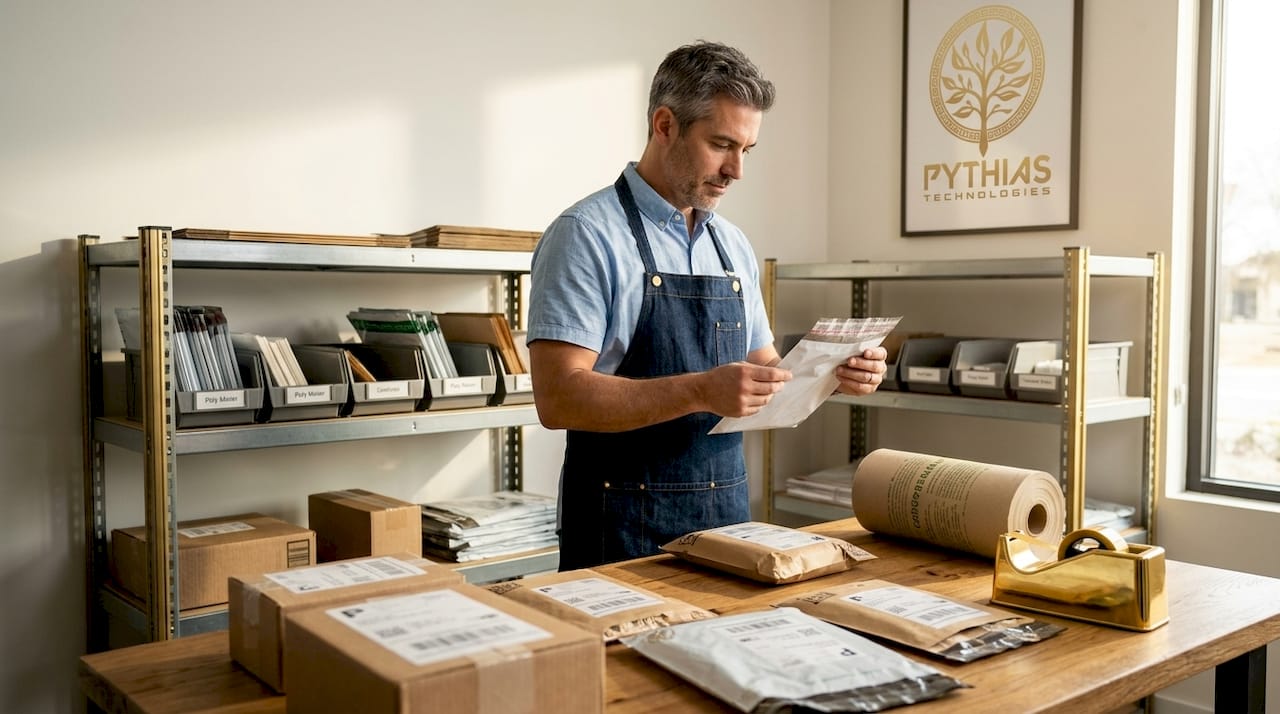
Switching from oversized generic mailers to right-sized 90 GSM recycled kraft mailers, combined with optimized closure methods and documented pack-out SOPs, produced a 28% reduction in shipping damage and a 15% reduction in dimensional shipping volume. That is not a marginal gain. For a shop shipping 500 orders per week, a 15% reduction in dimensional volume translates directly to lower carrier invoices.
The key insight from that case study: packaging effectiveness depends more on reducing internal product movement than on material thickness. A well-fitted poly mailer with a secure seal outperforms a padded envelope with extra space. Garments shift during transit, and that movement causes print abrasion and fold damage.
Engineering packaging for dominant parcel failure modes yields better results than simply adding more padding. If your primary failure mode is compression, you need structural rigidity. If it is drop damage, you need cushioning at the corners. Identify which failure mode drives your damage claims, then spec your packaging accordingly.
| Packaging option | Best for | Risk to avoid | Cost impact |
|---|---|---|---|
| Poly mailer (fitted) | Folded tees, lightweight apparel | Abrasion if too loose | Low cost, low DIM weight |
| Kraft mailer (90 GSM) | Single to 3-unit orders | Moisture in transit | Low cost, moderate protection |
| Rigid mailer | Embroidered hats, structured items | Overkill for soft goods | Higher cost, better protection |
| Corrugated box | Bulk orders, multi-unit shipments | DIM weight charges | Variable, watch dimensions |
Pro Tip: Place your shipping label on the flattest face of the parcel, away from seams and closures. Label readability failures at carrier scan points cause sorting errors that delay delivery by 24 to 48 hours.
Technology integration: automation, tracking, and returns
The textile shipping workflow scales when technology handles the repetitive decisions. Here is what a well-integrated technology stack delivers for custom print fulfillment operations.
- Automated shipping rules. Define logic once: carrier, service level, and package type selected automatically based on order weight, destination zone, and SKU category. No manual carrier decisions per order.
- Real-time stage tracking. Stage-level tracking from print queue through pack to carrier gives you operational visibility and feeds customer-facing status updates. Platforms achieving a 99.9% on-time delivery rate use this as a core operational control.
- Returns automation. Automated returns portals generate return labels, route returned garments to inspection, and trigger refund or replacement workflows without manual processing.
- Marketplace integration. Orders from Shopify, Etsy, Amazon, and your own site flow into one queue. Routing to the right production provider happens automatically. For Shopify-connected workflows, automated flow rules can trigger shipping label creation the moment a production job reaches “complete” status.
- Centralized shipping dashboard. All carrier accounts, tracking data, and exception alerts appear in one view. Centralizing carrier selection and shipping operations reduces operational friction and lets your team focus on exceptions rather than routine decisions.
Pro Tip: Set automated alerts for any shipment that has not received a carrier scan within 12 hours of label creation. Early detection of label-generation errors or carrier pickup failures prevents delivery misses before the customer notices.
Troubleshooting common shipping workflow mistakes
Even well-designed workflows break down. The most frequent failure points in printing order delivery are predictable and preventable.
- Under-curing before shipment. Ignoring print curing variability generates downstream complaints and rework. Cure temperature and dwell time must be logged per batch and verified before garments move to packing.
- Mis-picks at packing. Happens when production batches multiple SKUs without clear physical separation. Barcode scanning at the packing station catches this before the parcel seals.
- Address validation gaps. Unvalidated shipping addresses cause failed deliveries and carrier fees. Run address validation at order intake, not at label generation.
- Unclear handoff boundaries. When production, packing, and shipping share overlapping responsibilities without defined transfer points, errors fall through the gaps. Assign ownership per stage.
- Exception backlog. Shipping exceptions pile up when no one monitors the carrier dashboard daily. Assign one person to exception management with a response SLA.
Operational transparency from print queue through pack to shipping carrier is essential for reliable delivery and good customer experience. ShipSage
My take on what most print shops get wrong
I have seen a lot of print shops invest in equipment and technology, then watch their fulfillment performance stay flat. The reason, in nearly every case, is that they treat shipping as the last step rather than an integrated system.
What I mean by that: if your QC gate is weak, no amount of carrier automation will save you. A beautifully automated shipping rule set attached to an under-cured DTG print still results in a return and a refund request. The technology multiplies whatever is already happening in your production process, both the good and the bad.
The second thing I have learned is that automation without human checkpoints creates blind spots. The shops that perform best do not eliminate human oversight. They shift it. People stop making manual carrier decisions and start monitoring exception queues and reviewing QC reports. That is a smarter use of your staff’s attention, and it scales better than adding headcount to manual tasks.
My practical advice: pick one stage of your workflow that generates the most re-ships or customer complaints. Fix that stage completely before adding automation anywhere else. A barcode scanner at packing costs very little and delivers immediate, measurable results. Start there if you have not already. Build from a verified foundation, not from a wish list of features.
— Michael
How Pythiastechnologies supports your shipping workflow
Pythiastechnologies is a print-on-demand production automation platform built specifically for garment printing businesses. It covers order management, production scheduling, inventory, barcode and label printing, and marketplace integration in one connected system.

The platform features include route-based provider assignment, automated shipping rules, real-time production queue tracking, and barcode integration at the packing stage. Orders from Shopify, Etsy, and other marketplaces route automatically to the correct production provider based on the rules you define. Shipping labels generate when jobs complete, and tracking numbers push directly to your dashboard and customer notifications. If you are ready to see how it works end to end, the Pythiastechnologies platform overview is the right place to start.
FAQ
What are the main steps in a garment printing shipping workflow?
The core steps are order receipt, provider assignment, production queue entry, decoration and curing, quality control, packing with barcode verification, carrier handoff, and post-shipment tracking. Each stage requires a clear handoff point and defined ownership to prevent errors from carrying forward.
How does barcode scanning reduce shipping errors?
Barcode scanning at the packing stage confirms that the correct item and quantity match the open order before the parcel is sealed. This prevents mis-picks, which are one of the leading causes of re-ships and customer dissatisfaction in custom print fulfillment.
What packaging reduces shipping damage for garment orders?
Right-sized poly or kraft mailers fitted to the garment dimensions reduce internal product movement, which is the primary driver of print abrasion damage. Properly dimensioned mailers can cut damage rates by 28% compared to generic oversized packaging.
How do multi-carrier platforms improve printing order delivery?
Multi-carrier platforms automate carrier and service-level selection based on weight, destination zone, and order type. This removes manual decisions per order, reduces fulfillment time, and consolidates tracking and returns management into a single dashboard for better exception visibility.
When should quality control happen in the workflow?
QC must happen after curing and before packing. Garments that fail QC after being packed generate re-ship costs and carrier waste. Curing verification at 320°F with post-cure inspection is the standard for screen-printed garments and should gate all decoration methods before items enter the packing stage.
Recommended
- DTG Printing Order Management for Print Shops in 2026 | Pythias Technologies | Pythias Technologies
- Pythias Technologies — Print-on-Demand Automation Platform
- Features | Pythias Technologies | Pythias Technologies
- Label & Barcode Printing for Print Shops | Pythias Technologies | Pythias Technologies